If you’ve ever watched a pump truck driver spend twenty minutes probing your yard with a metal rod trying to find the tank lid, then dig up a chunk of grass to get to it, you already know why risers exist. A septic tank riser is a pipe that extends from the tank lid up to (or just above) ground level, so the access point is always visible and reachable — no digging, no guessing, no busted sprinkler lines.
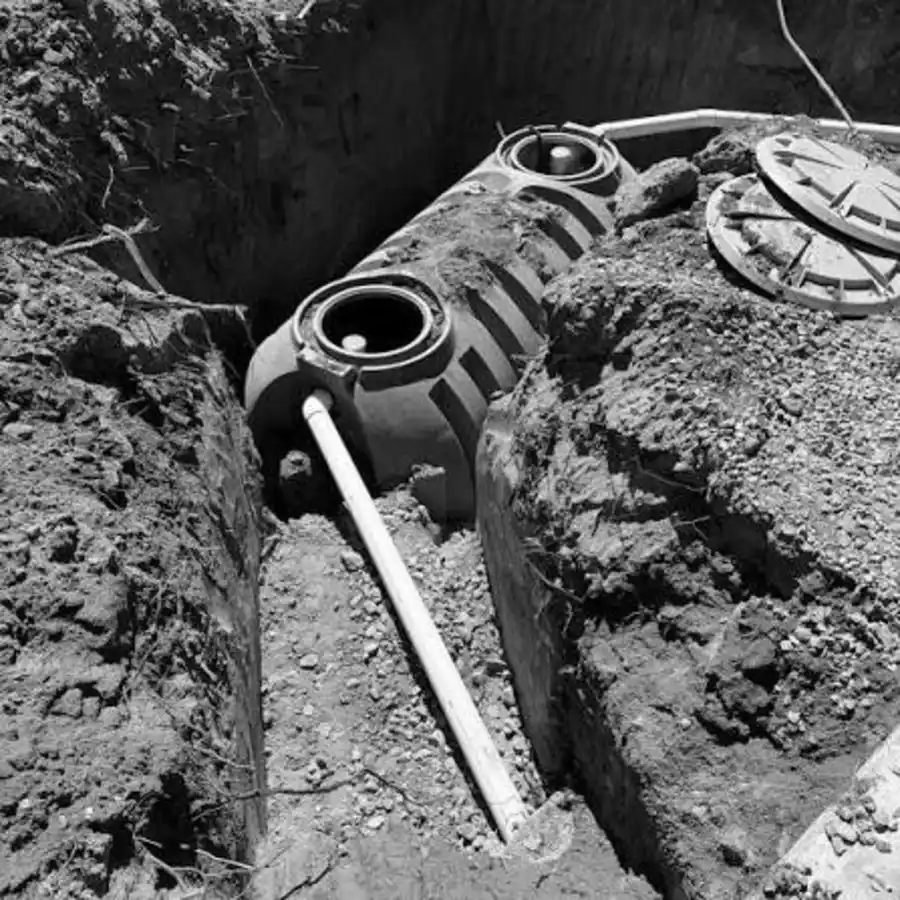
Risers aren’t required by every state, but they’re one of the highest-value upgrades you can make to an older system, and most of our pros recommend adding them the first time a tank has to be uncovered by shovel.
What Is a Septic Tank Riser, and What Does It Do?
A riser is a rigid plastic or concrete cylinder that sits on top of the tank’s access opening and extends upward, capped with a secure, often lockable lid. Instead of the access point sitting 8-24 inches underground under sod, it’s sitting right at grade — flush with the lawn or just barely above it.
The riser doesn’t change how the tank works. It changes how easy the tank is to service. Every pump-out, inspection, and filter cleaning starts with someone opening that lid, and a riser turns that from a shovel job into a five-second task.
Why Risers Are Worth Installing
- Lower service costs over time. Many companies charge a “locate and dig” fee of $75-150 when a tank isn’t riser-equipped. That fee disappears once risers are in.
- Less lawn damage. No more digging up the same patch of grass (or landscaping) every one to three years.
- Faster response in an emergency. If your alarm goes off or the tank is backing up, a technician can get to the lid immediately instead of searching for it first.
- Safer access. A secured, above-grade lid is much harder for kids or pets to accidentally uncover than a buried, unmarked lid that’s been paved over or grown in with grass.
How Septic Tank Riser Installation Works
The process is straightforward for a standard residential tank:
- The technician locates the existing tank lid(s), usually with a probe rod or by referencing the as-built diagram from your last inspection.
- The soil above the lid is excavated just enough to expose the opening.
- A riser ring is sized and fitted to the opening, sealed with a rubber gasket or sealant to keep water and soil out.
- A secure, traffic-rated or standard lid is fastened on top — locking hardware is common for households with kids or pets.
- The excavated area is backfilled around the riser, leaving the lid at or slightly above grade.
Most tanks have two access points (inlet and outlet sides, or inlet and the pump/effluent filter chamber), and it’s worth riser-ing both while the ground is already open.
Riser Considerations by Region
The install itself is similar everywhere, but a few regional factors change the details:
- Freeze-line states (Upper Midwest, Northeast): Risers here often get an insulated lid or foam collar, since an above-grade access point is more exposed to frost than a buried one — an uninsulated riser in a cold climate can occasionally contribute to a frozen line if it’s not detailed correctly.
- High-water-table areas (Florida, Gulf Coast): Risers need a well-sealed gasket and sometimes a slightly raised lid to stay above seasonal groundwater and keep infiltration out of the tank.
- Clay-heavy soil (Southeast): Clay shifts more with wet/dry cycles than sandy soil, so risers here are usually set with a bit of gravel base under the ring to keep them from settling unevenly over time.
What Septic Tank Riser Installation Costs
For a standard residential tank, expect:
- $300-800 per riser installed, including excavation, the riser ring, sealant, and a locking lid
- Most homes need two risers (inlet and outlet, or tank and pump chamber), so a full job commonly runs $600-1,600
- Concrete risers cost more than plastic/polyethylene risers but hold up better under vehicle traffic or heavy foot traffic areas
Many companies will knock the riser installation cost down, or do it at a reduced rate, if it’s scheduled alongside a routine pump-out — since the tank is already being opened, it’s a good time to do it.
Frequently Asked Questions
Do I need a permit to install a septic tank riser?
Usually not, since it doesn’t change the tank’s function or capacity — but some counties do require a permit or at least a notification for any septic system work. Your service pro can tell you what your local health department requires.
Can I install a septic riser myself?
It’s possible for a handy homeowner, but getting the seal wrong is the most common DIY mistake — a poorly sealed riser lets groundwater and surface runoff into the tank, which dilutes the treatment process and can shorten pump-out intervals. Most people have this done professionally, often bundled with a pump-out visit.
Will a riser make my septic tank lid visible and ugly in my yard?
A well-installed riser sits flush or barely above grade with a locking, often green or tan lid designed to blend into grass. Decorative covers are also available if you want it to disappear visually.