What size septic tank do I need? Septic tanks are sized based on the number of bedrooms in a home, not square footage or the number of people currently living there — because bedroom count is what building codes use to estimate a home’s maximum realistic occupancy and daily wastewater flow. Here’s how sizing actually works, and how to tell if your current tank is too small for your household.
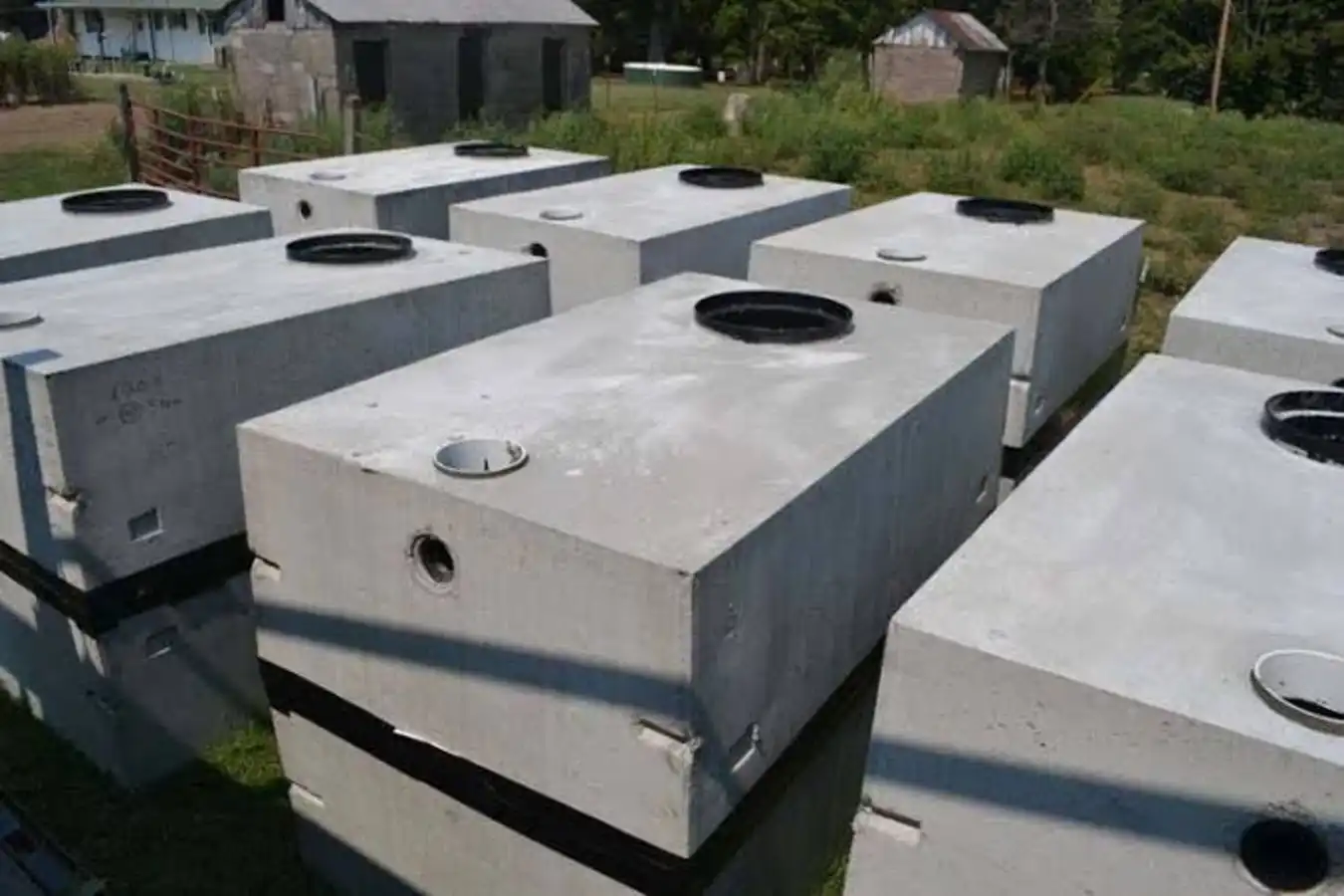
What Size Septic Tank Do I Need by Bedroom Count?
- 2 bedrooms or fewer: 750-1,000 gallons
- 3 bedrooms: 1,000-1,250 gallons (the most common residential size)
- 4 bedrooms: 1,250-1,500 gallons
- 5 bedrooms: 1,500 gallons and up
- 6+ bedrooms or a home with a hot tub, large garden tub, or in-law suite: often requires a custom engineered sizing calculation rather than a standard chart size
These ranges are common general guidelines — your state or county health department sets the exact required minimum size for new installations, and local soil conditions can push the required size higher than the chart minimum.
How Tank Size Is Actually Calculated
Sizing codes assume two people per bedroom at maximum occupancy and a set number of gallons of wastewater per person per day (typically 100-150 gallons, depending on the state code). The tank needs enough volume to hold roughly two days of wastewater flow so solids have time to settle out before the liquid moves on to the drain field. That’s why a tank is sized for bedrooms, not current household size — code assumes the home could be resold to a larger family without the septic system needing to change.
Why Tank Size Affects Pumping Frequency
A smaller tank fills with solids faster relative to its capacity, so it needs pumping more often for the same household size. A family of four in a 1,000-gallon tank will typically need pumping sooner than the same family in a 1,250-gallon tank. If your household has grown since the tank was installed — more residents, a finished basement bedroom, a long-term guest — your pumping schedule should move up accordingly. Our pumping frequency guide breaks this down further.
Undersized Tanks: Warning Signs
- Needing pumping noticeably more often than the typical 3-5 year interval, even with normal household habits
- Slow drains or backups that show up specifically during high-usage periods (guests staying over, laundry days)
- A tank that was sized for a smaller home before an addition or bedroom conversion
Upgrading to a Larger Tank
If an inspection confirms your tank is genuinely undersized for current use, options range from adding a second tank in series to full tank replacement, depending on site space and local code. This is a job for a licensed septic contractor working with your local health department — not a DIY project, since an incorrectly sized or installed system can fail inspection or cause drain field problems down the line.
Frequently Asked Questions
How do I find out what size my current tank is?
Check your home’s septic permit or as-built records from your local health department, or ask your pumping technician to measure it during your next service — they can calculate volume once the tank is exposed and accessed.
Can a tank be too big for a house?
Not in a harmful way — an oversized tank simply means more time between pumpings. There’s no downside to a larger tank other than higher upfront installation cost.
Related Reading
- How Often Should You Pump Your Septic Tank? (Complete Guide)
- Septic Tank Pumping Cost: 2026 National Cost Guide
- Septic Inspection Checklist for Home Buyers
What Size Septic Tank Do I Need: Getting Professional Help
Bedroom-count tables give a solid starting point, but a licensed technician can confirm the exact answer for your property based on local code and your household\u2019s actual water use. The EPA\u2019s overview of septic system sizing explains why an undersized tank can shorten the life of the whole system. If you are still asking what size septic tank do I need for a renovation, addition, or new install, reach out through our contact page and a technician can size it correctly the first time.