Our septic pumping equipment is commercial-grade, built for the job — every pro we dispatch shows up with it, not a shop-vac and a shovel.
Vacuum Trucks
Standard equipment for any pumping job. Our network’s trucks carry enough vacuum capacity to fully empty residential tanks in one visit, with tanks rated for proper transport to a licensed disposal or treatment facility.
Tank Locating Tools
If you don’t have a riser or diagram, pros use metal detectors, probing rods, and in some cases sewer camera equipment fed through a cleanout to find the tank without guesswork — see our guide on how to locate your septic tank.
Sewer Cameras
For inspections or diagnosing a slow drain, a waterproof camera on a flexible cable lets a pro see inside the pipe or tank in real time, spotting root intrusion, cracks, or blockages without digging.
Riser & Access Equipment
For tanks without easy access, pros carry riser kits, lids, and the excavation tools needed to install a permanent access point — see our riser installation guide for cost and benefit details.
Aerobic Treatment Unit (ATU) Testing Kits
For homes with an ATU instead of a standard gravity tank, pros carry the testing equipment needed for the effluent quality checks most permits require — see our ATU inspection guide.
Safety Equipment
Confined-space and gas-detection equipment, protective gear, and containment materials to keep the job site clean and safe for your family and pets throughout the visit.
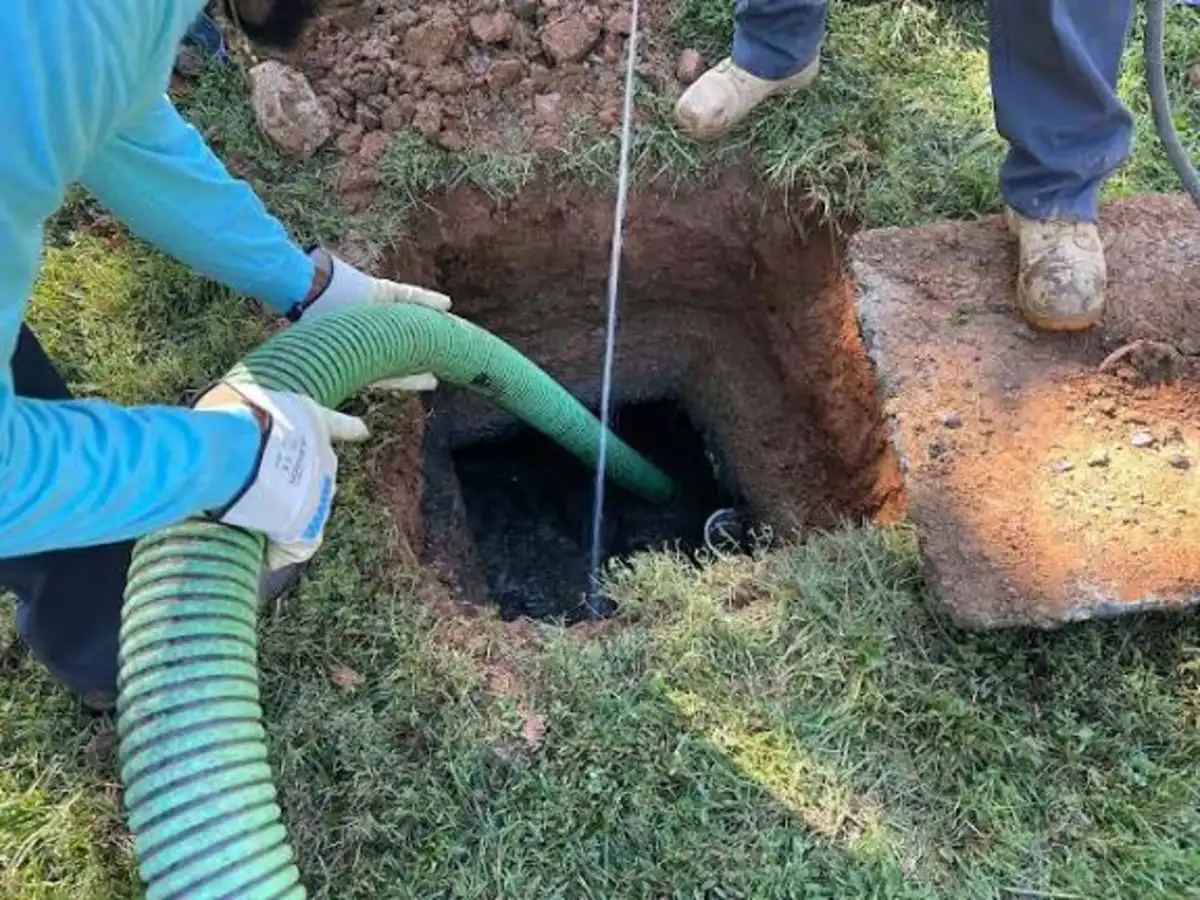
What Our Septic Pumping Equipment Includes
The septic pumping equipment our network technicians use includes vacuum trucks rated for residential and commercial tank sizes, sludge judges to measure scum and sludge layers before pumping, and high-pressure jetters for clearing blocked lines when needed. Many crews also carry pipe-inspection cameras to check line condition without unnecessary digging.
Why Proper Equipment Matters
Undersized or improperly maintained equipment can leave sludge behind, damage tank components, or simply take far longer than it should. Licensed septic pumping equipment is built to fully evacuate a tank in one visit and to do it without damaging risers, baffles, or lids in the process.
Frequently Asked Questions
Do all technicians use the same septic pumping equipment?
Equipment varies by technician and region, but every provider in our network is required to carry commercial-grade vacuum trucks and standard diagnostic tools appropriate for residential and light commercial work.
Will the equipment damage my lawn or driveway?
Technicians position trucks to minimize impact and use hose extensions to reach tanks that aren’t close to a driveway. Ask ahead of time if you have concerns about a specific access point.
For general background on how septic systems function, see the EPA’s septic systems overview, or browse cost and maintenance guides in our Septic Learning Center.
How often does septic pumping equipment need to be serviced or inspected?
That’s on the provider’s side, not yours — but it matters to you indirectly. Well-maintained equipment runs more efficiently, which usually means a faster visit and fewer callbacks. Licensed operators are required to keep their trucks and tools in working order to stay compliant in most states.
If you’re curious what to expect on the day of service, our step-by-step process page walks through exactly how a visit unfolds from first call to a clean tank.
Bottom line: the right septic pumping equipment, in the hands of a licensed technician, is what separates a thorough visit from one that leaves sludge behind and brings you back to square one within a year.
Have a question about a specific piece of equipment or an unusual access situation at your property? Contact us and we’ll connect you with a technician who can answer before your appointment.