Septic drain field repair is the most expensive septic problem you can have, and it’s almost always preventable. I’ve walked plenty of yards where the owner ignored a soggy patch for two summers before calling anyone — by then we’re talking excavation instead of a simple fix. Here’s how to tell if your drain field is actually failing, what can be repaired versus replaced, and what it’s going to cost either way.
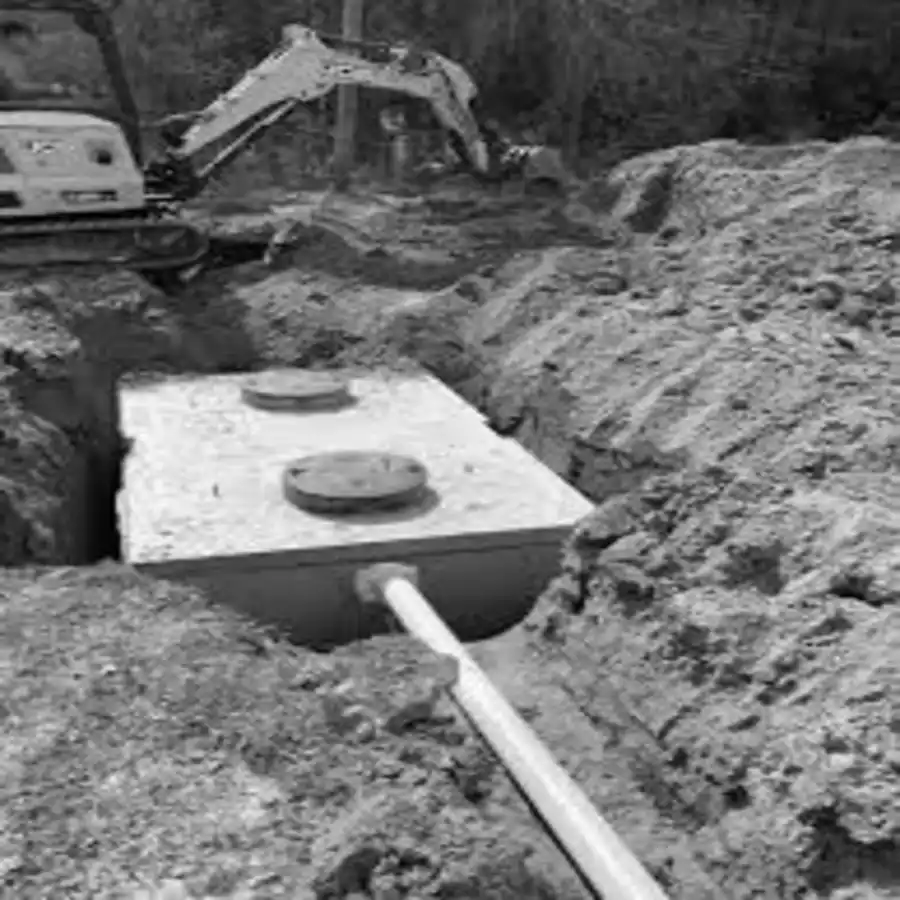
What Is a Drain Field, and Why Does It Fail?
After your septic tank separates solids from liquid, that liquid (effluent) flows out to the drain field — a network of perforated pipes buried in gravel trenches that let the effluent soak into the soil, where naturally occurring bacteria finish treating it. A healthy drain field can last 20 to 30 years or more. It fails when the soil around the pipes gets clogged with a biomat (a layer of solids and bacterial slime) faster than it can break down, or when the field is simply overwhelmed by more water than it was designed to handle.
Common causes: a tank that hasn’t been pumped in years and lets solids escape into the field, tree roots growing into the pipes, driving or parking heavy equipment over the field and compacting the soil, or a household simply using more water than the system’s original design flow.
Signs Your Drain Field Is Failing
- Soggy, spongy ground or standing water over the field, even when it hasn’t rained recently
- A sewage smell outside near the drain field area
- Grass over the field that’s noticeably greener, thicker, or growing faster than the rest of the yard
- Slow drains throughout the entire house, not just one fixture
- Sewage backing up into tubs or toilets, especially the lowest drain in the house
- Gurgling in the plumbing after multiple fixtures are used close together
One or two of these on their own might point to something smaller, like a tank that’s simply due for pumping. Several at once, especially standing water and odor together, usually means the field itself is struggling.
Septic Drain Field Repair or Replacement: Which Do You Need?
It depends how far along the failure is, and a good technician will look at the whole picture before recommending either option:
- Aeration or oxygenation treatment: Injecting air into the field can help restore the bacteria that break down the biomat, sometimes reversing early-stage clogging without any digging.
- Enzyme or bacterial additive treatment: Can help break down a biomat that isn’t too far gone, though it’s not a fix for a field that’s been failing for years.
- Rerouting or resting a section: Some systems have a distribution box that can redirect flow to a less-used section of the field, giving an overworked area time to recover.
- Partial replacement: Replacing just the failed section of pipe and gravel, leaving the rest of the field intact.
- Full replacement: Needed when the soil itself is permanently clogged or compacted, or the field was undersized for the household from the start.
The honest answer is that a field caught early with soggy spots and mild odor has real repair options. A field with sewage surfacing on the lawn for months, or backups inside the house, is usually past the point where a treatment alone will fix it.
What Affects Drain Field Lifespan by Region
I get asked “how long should mine last?” constantly, and the honest answer is: it depends a lot on what’s under your yard and what the weather does to it.
- In the Southeast, where dense clay soil is common, water percolates more slowly to begin with, so fields tend to show stress earlier and are more sensitive to overloading.
- In Florida and other coastal areas with a high water table, the soil has less vertical space to filter effluent before hitting groundwater, which is exactly why so many of those systems are aerobic instead of conventional — but even aerobic drain fields can fail if the water table rises during a wet season.
- In arid parts of the Southwest, sandy, well-draining soil often means longer field lifespans, though rock and caliche layers in some areas can cause the opposite problem.
- In the Upper Midwest and Northeast, a hard freeze can crack pipes or a distribution box if the field isn’t buried deep enough, so winterizing before the ground freezes matters more there than almost anywhere else.
Cost to Repair or Replace a Drain Field
Aeration or enzyme treatments generally run $500 to $1,500 and are worth trying first on an early-stage problem. A partial repair — replacing a section of pipe and gravel — typically falls between $3,000 and $10,000 depending on how much of the field needs work and how accessible it is. A full drain field replacement usually runs $10,000 to $20,000 or more, especially if a new design (like a mound or aerobic spray system) is required because the original site conditions won’t support a conventional field a second time.
How to Prevent Drain Field Failure
- Pump your tank on schedule — a field fails faster when solids from a neglected tank escape into it
- Don’t park, drive, or build over the drain field, which compacts soil and crushes pipes
- Spread out laundry loads and heavy water use instead of running everything in one day
- Keep trees and deep-rooted plants well away from the field
- Avoid flushing anything other than human waste and toilet paper — wipes, grease, and chemicals all stress the biological treatment process
Frequently Asked Questions
How long do drain fields typically last?
A well-maintained conventional drain field usually lasts 20 to 30 years, though soil type, water table, household water use, and regular tank pumping all affect that number significantly. Some fields fail in half that time when the tank is never pumped or the field is regularly overloaded.
Can I drive or park on my drain field?
No. The weight compacts the soil, which reduces its ability to absorb and filter effluent, and it can crush the pipes and gravel underneath. Keep vehicles, sheds, pools, and anything heavy off the field entirely.
Will a new septic tank fix a failing drain field?
No — the tank and the drain field are two separate parts of the system. A new tank won’t repair soil that’s already clogged or compacted. If the field itself has failed, it needs its own repair or replacement regardless of the tank’s condition.
Related Reading
- Septic Learning Center — the full guide library
- 10 Warning Signs Your Septic Tank Needs Pumping Now
- Aerobic Treatment Unit (ATU) Inspection Guide
Septic Drain Field Repair: Getting Professional Help
Before you commit to a septic drain field repair or a full replacement, it is worth having a licensed technician confirm exactly what is failing. The EPA\u2019s overview of how septic systems work explains why the drain field is the hardest and most expensive part of a system to fix once the soil itself is saturated with effluent. If you are seeing soggy patches, slow drains, or sewage odors in the yard, contact us through our contact page so a technician can inspect the field and recommend the right septic drain field repair before it turns into a full replacement.